What tools do you need in a microbiology laboratory?

In a microbiology laboratory, tools are needed for the growth and storage of microorganisms, such as incubators and freezers, preparation and handling tools such as scales, vortex mixers and pipettes, and consumables such as petri dishes, tubes and culture media. In a modern laboratory, data management software cannot be missing, which is essential for recording results, monitoring experiments and generating reliable reports, ensuring accuracy and safety.

In this post you will find the tools that can be found in almost all microbiology laboratories, with practical guidance for selecting the right equipment and an overview of the models that Jointlab can provide you.

1. Microbiological incubators

Incubators are the operational heart of the laboratory: they maintain a stable and controlled temperature during the growth of bacteria, yeasts and molds, ensuring reproducible conditions and reliable results.

What to evaluate:

  • Thermal uniformity and stability

  • Internal ventilation (natural or forced): Natural, for delicate cultures and processes that require low turbulence. Forced, for high loads, multiple plates or needs for fast temperature recovery.

  • Temperature range: Bacterial incubations (30–40°C), yeast and mold growth (25–30°C; refrigerated incubator ), microorganism testing (4–20°C), or applications requiring up to 100°C, such as heat resistance testing.

  • Available volumes: from small benchtop incubators for fast routines to large chambers for large sample quantities.

  • Technology: Peltier systems for low vibration and high stability, or conventional heating/refrigeration systems for wider temperature ranges.

  • Additional functions useful for those who work in microbiology: possibility of remote monitoring, recording of parameters.

Jointlab solutions:
Pol-Eko incubators are highly regarded in microbiology laboratories for their excellent thermal uniformity and robust construction. They are available both ventilated and natural convection, with low-consumption Peltier technologies or refrigerated models to cover extended temperature ranges. They offer an advanced control panel, already in the standard version, and configurations suitable for daily microbiological routines and more specialized applications.

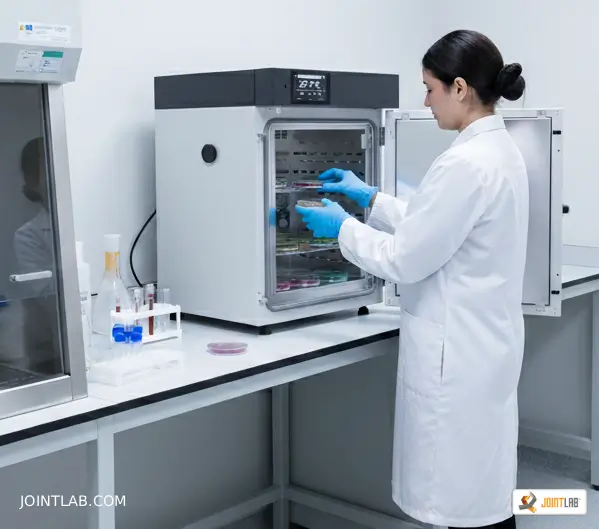
Laboratory operator inserts Petri discs into a Pol-Eko incubator ; next to champions and a hood.

2. Thermostats and thermostatic baths

Thermostats and thermostatic baths are essential tools for keeping samples, media, reagents, or tubes at a controlled temperature with high precision, ensuring stable and reproducible conditions in all laboratory applications.

What to evaluate:

  • Temperature range: heating thermostat or also coolant?
  • Thermal stability

  • Fast time to reach setpoint

  • Bath volume: Depending on how many samples you need to treat together: small baths for a few tubes or larger baths for larger quantities.

  • Compatibility with reagents and heat transfer fluids
  • Circulation type and recirculation pump: An adjustable pump allows the flow velocity to be adapted to suit the type of samples; Small bottles, multiple tubes, or larger flasks require different flows to achieve the same thermal accuracy in all containers.
  • Additional functions for the professional routine: remote monitoring possible, programmable settings and data logging for traceability and compliance with laboratory standards.

Jointlab solutions:
Thermostats and temperature control devices LAUDA offer precise control, advanced PID technology with ± 0.01 K accuracy and great reliability over time. The new Universa series, launched in 2025, is modular and ready for future integrations with new connections, remote monitoring systems and new possible AI-managed apps, ensuring versatility and compatibility with the needs of modern and evolving laboratories.

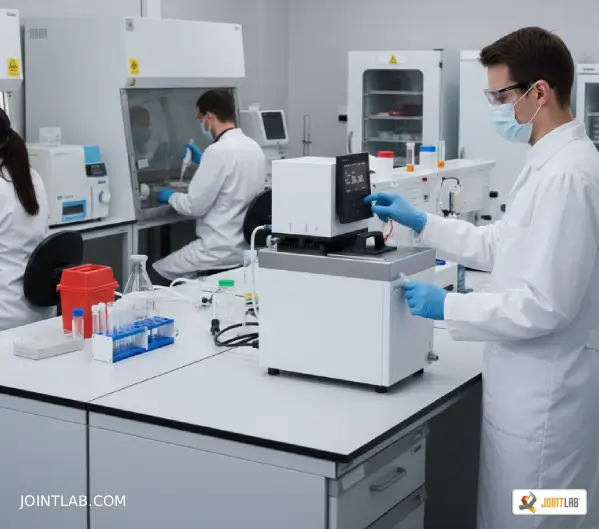
Laboratory operator uses a Lauda Universa thermostat in a microbiological laboratory.

3. Autoclave

The autoclave sterilizes using saturated steam at high pressure, eliminating vegetative forms and spores from culture media, instrumentation, contaminated materials and biological waste. It ensures complete microbial inactivation, preventing cross-contamination and ensuring the validity of microbiological procedures.

What to evaluate:

  • Capacity: from small benchtop models up to larger units for high sterilization volumes.

  • Programmable cycles: Optimized settings for culture media, liquids, instruments, and biological waste.

  • Easy maintenance: access to components, tank management and gasket replacement.

  • Safety and certifications: anti-opening systems, pressure controls and compliance with laboratory regulations.

Note:
At the moment Jointlab does not offer autoclaves.

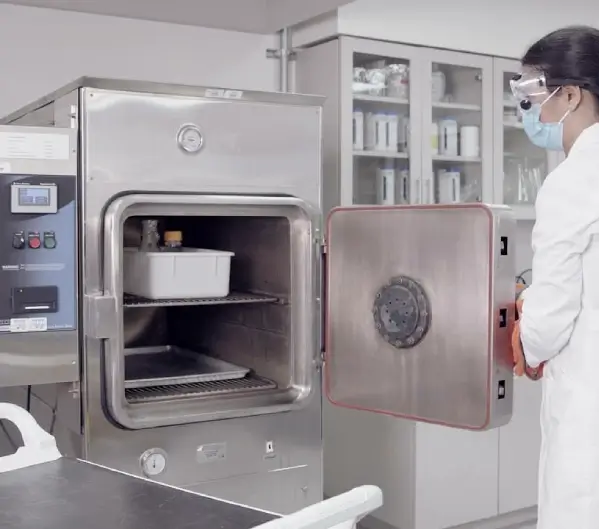
Operator closes autoclave in a laboratory.

4. Laboratory refrigerators and freezers

In microbiology laboratories, refrigerators and freezers are essential for storing microbial strains, quiescent microorganisms, biological samples, media, and reagents. This equipment ensures controlled and stable temperatures that preserve the viability of microorganisms and the integrity of sensitive materials.

What to evaluate:

  • Temperature range and stability: for standard refrigerators 2–8 °C, for freezers from –20 °C to –80 °C, depending on storage requirements.

  • Alarms and safety systems: visual and acoustic signals for out-of-range values, power outages or malfunctions, so that you can react promptly.

  • Compressor reliability and energy consumption: ensure continuous operation and reduce the risk of breakdowns during critical periods.

  • Connections: even for refrigerators you can equip yourself with control software, to have the history of temperatures and any alarms everywhere.

Jointlab solutions:
Jointlab specializes in medical, industrial and research refrigeration; this is guaranteed by the dedicated Frigolab website. Among the hundreds of models available, you will certainly find the ideal one for your applications, spaces and budget.
We are official distributors of B Medical Systems, Pol-Eko and Liebherr. Under the Jointlab brand you will find as many important models, at an excellent quality / price ratio.

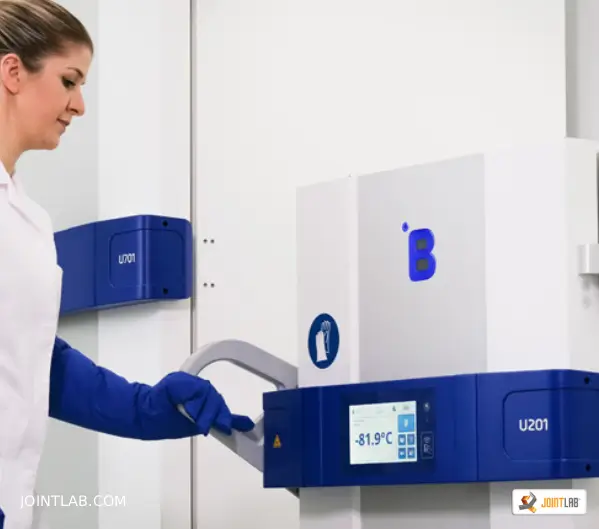
Operator opens a small B Medical Systemsultra-cold freezer with a large cryogenic glove.

5. Laboratory Centrifuges

Centrifuges enable the separation of cellular components, the isolation of bacterial pellets, and the preparation of samples by differential sedimentation. The selection of the appropriate equipment, based on speed, relative centrifugal force (RCF), and rotor type, determines the effectiveness of separation and the reproducibility of analytical procedures.

What to evaluate:

  • G-force or maximum speed: Determines the effectiveness of separation and the type of samples that can be processed.

  • Rotor capacity: from centrifugation of a few microtubes up to large volumes in Falcon or 15/50 ml tubes.

  • Compatibility with different types of containers: microtubes, Falcon tubes, standard laboratory tubes, rotors adaptable to needs.

  • Refrigerated option: Indispensable for heat-sensitive samples, such as bacterial strains, enzymes, or biological samples, ensuring integrity and viability during the process.

  • Practicalities: ease of cleaning and decontamination; shielding/containment to work with potentially pathogenic samples; Noise level

Jointlab solutions:
Jointlab offers a selection of the most used centrifuges in the laboratory of the Ohausbrand, many of which have the most common rotor already matched. You can find the suitable model in the laboratory centrifuge category.

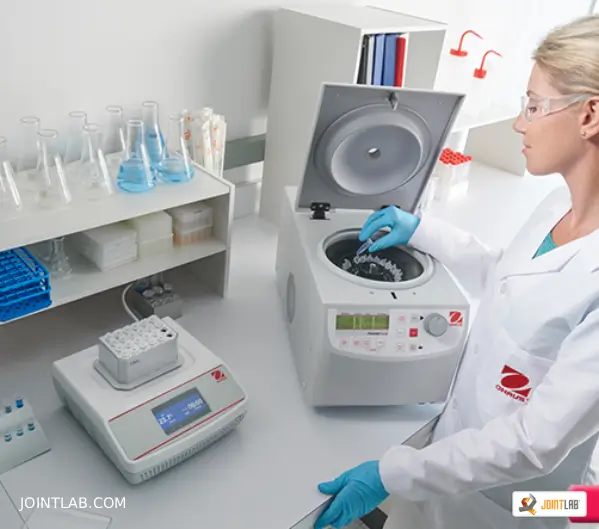
Operator inserts a test tube into the ohaus center, placed on a table next to other laboratory instruments.

6. Laminar Flow Hoods / Biosafety cabinet

Laminar flow hoods and biosafety cabinets create a controlled sterile environment that is essential for the handling of microorganisms, while protecting both samples and the operator from contamination.

What to evaluate:

  • Cabinet class: I, II or III, depending on the level of protection required for operators, samples and the environment.

  • HEPA filter: essential for retaining particles and microorganisms, ensuring sterile air outlet and flow protection.

  • Ergonomics: worktop height, visibility, ease of access and operator comfort during prolonged use.

  • Noise: a low level reduces stress and operator fatigue.

  • Maintenance and certification: regular checks, filter replacement and periodic certifications are essential to ensure continuous efficiency and safety.

Jointlab solutions:
There are no laminar flow hoods available on our webshop, but we can supply you with Pol-Eko fume hoods or safety cabinets.

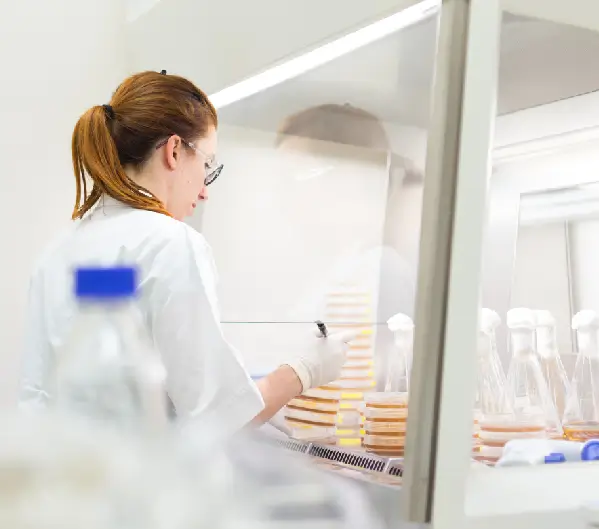
Operator prepares Petri dishes under a laminar flow hood.

7. Preparation and handling tools

In microbiology, in addition to the main tools presented, basic tools are also needed to prepare and handle samples safely and precisely.

  • Sterile micropipettes and tips
    Essential for picking up and transferring small volumes of liquids with precision and without contamination.

  • Agitators and vortexes
    Used daily to mix samples, suspensions and reagents, ensuring consistency and reproducibility. Vortexes are indispensable for microtubes and 15/50 ml tubes, while benchtop stirrers allow continuous and controlled mixing. Proper use of these instruments reduces the risk of experimental errors and speeds up laboratory operations.

  • Analytical Balances
    Required to weigh reagents, culture media and samples with high precision. Even small weighing errors can compromise microbiological experiments, making these instruments essential in the daily routine. Analytical balances enable accurate and reproducible preparations, supporting any laboratory in managing standardized protocols.

  • Petri dishes, test tubes, culture media
    Indispensable material for the growth and analysis of microorganisms.

  • Bunsen burner or microincinerator
    For the rapid sterilization of loops, needles and small instruments between handling, ensuring safe working conditions.

Jointlab solutions:
Jointlab provides professional shakers, vortexes and analytical balances, designed for daily use in microbiology and biology laboratories, ensuring precision, reliability and durability.

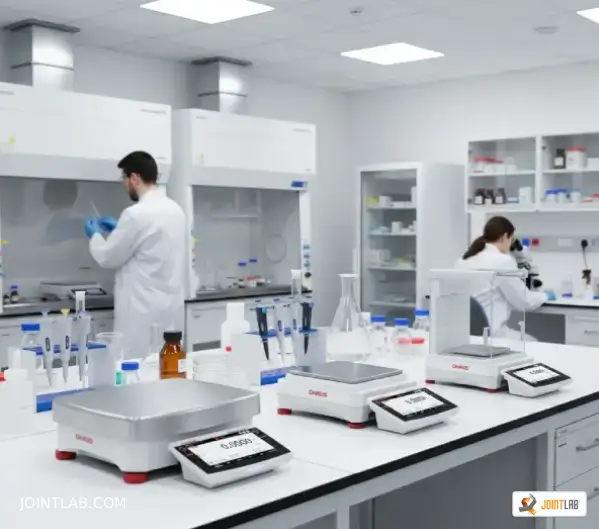
Three new Explorer scales Ohaus on a table in a laboratory for the research of microorganisms with hoods, freezers and operators.

8. Software and documentation

A modern laboratory must be able to record and track every phase of the work: incubation conditions, soil batches, temperatures, alarms and problems, analysis results and traceability of samples. Accurate data management is essential for both scientific quality and regulatory compliance.

Having tools that automatically generate reports (PDF, XLS), store histories, send notifications, or integrate with a LIMS dramatically improves workflow, reduces human error, and facilitates internal and external audits.

Solutions Jointlab:
Many tools offered by Jointlab include state-of-the-art connections (USB, Ethernet, Wi-Fi, secure protocols) and software developed by the manufacturers themselves such as LAUDA, Liebherr, Pol-Eko and VELP, which allow:

  • Continuous monitoring

  • Exporting data

  • Remote management

  • Integration with existing laboratory systems

These features make documentation more reliable and allow total control of analytical processes.

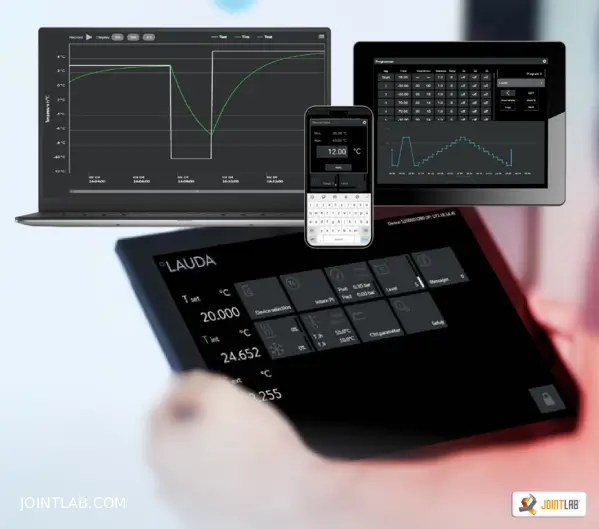
Devices with laboratory instrument control software.

Insights

  • Updated guide for external quality, planning and implementation of quality controls in microbiology laboratories: ECDC.Europa
  • Guidelines on quality management, method validation, measurement uncertainty, traceability: Eurachem.org
  • Laboratory biosafety manual, World Health Organization (WHO):Biosafety Manual 2004
Product added to compare.